Duela – Coffee Order-Ahead App
Helping busy coffee drinkers skip long lines with a fast, intuitive mobile ordering experience.

Problem Framing & Validation
To ensure the solution addressed a real, high-frequency need, the problem, goal, and hypothesis were defined together to align user pain points with measurable outcomes.
To ensure the solution addressed a real, high-frequency need, the problem, goal, and hypothesis were defined together to align user pain points with measurable outcomes.
The challenge
How might we design a coffee ordering experience that minimizes friction for repeat customers and fits seamlessly into their daily habits
Research & Discovery
Research focused on understanding repeat coffee-ordering behavior and identifying friction in existing order-ahead experiences.
Competitive Insight
To identify opportunities for Duela, we analyzed leading coffee and order-ahead apps currently used by urban customers. While most competitors offer ordering and rewards features, many experiences become complex or unclear during peak hours. These insights revealed an opportunity for Duela to prioritize speed, clarity, and pickup predictability.
User Goals & Pain Points
Synthesized from research insights to clarify user motivations and friction points.
Solution Overview
The solution prioritizes repeat ordering by reducing decision-making and making pickup timing predictable.
Instead of encouraging browsing, the experience adapts to users’ daily habits and surfaces familiar actions first.
User Persona & Empathy Map
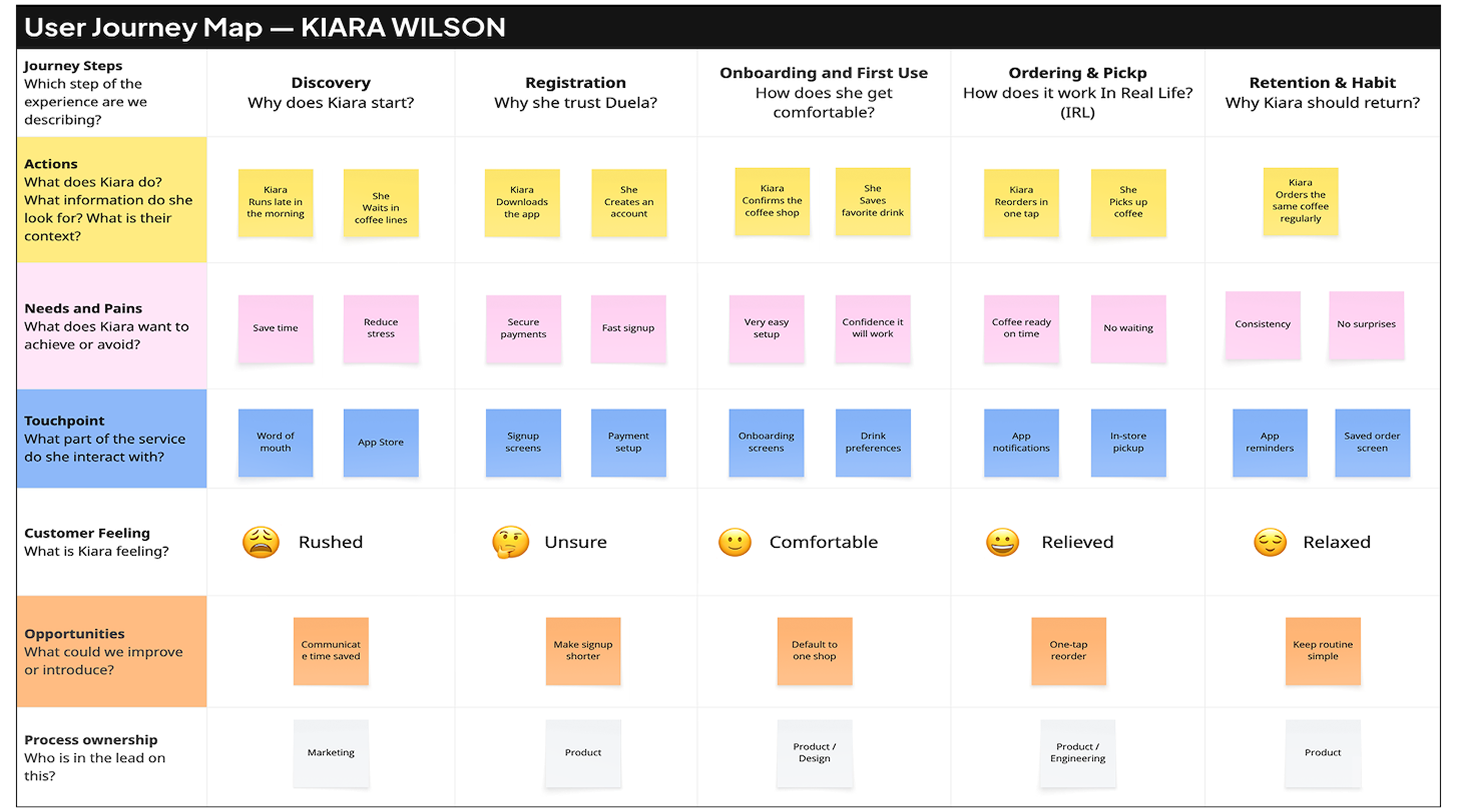
A primary user persona was created to represent busy coffee customers who value speed, routine, and reliability. An empathy map helped capture what users think, feel, and do during the ordering process, highlighting emotional pain points such as time pressure and uncertainty during busy mornings.


Key UX Decisions
User Flows
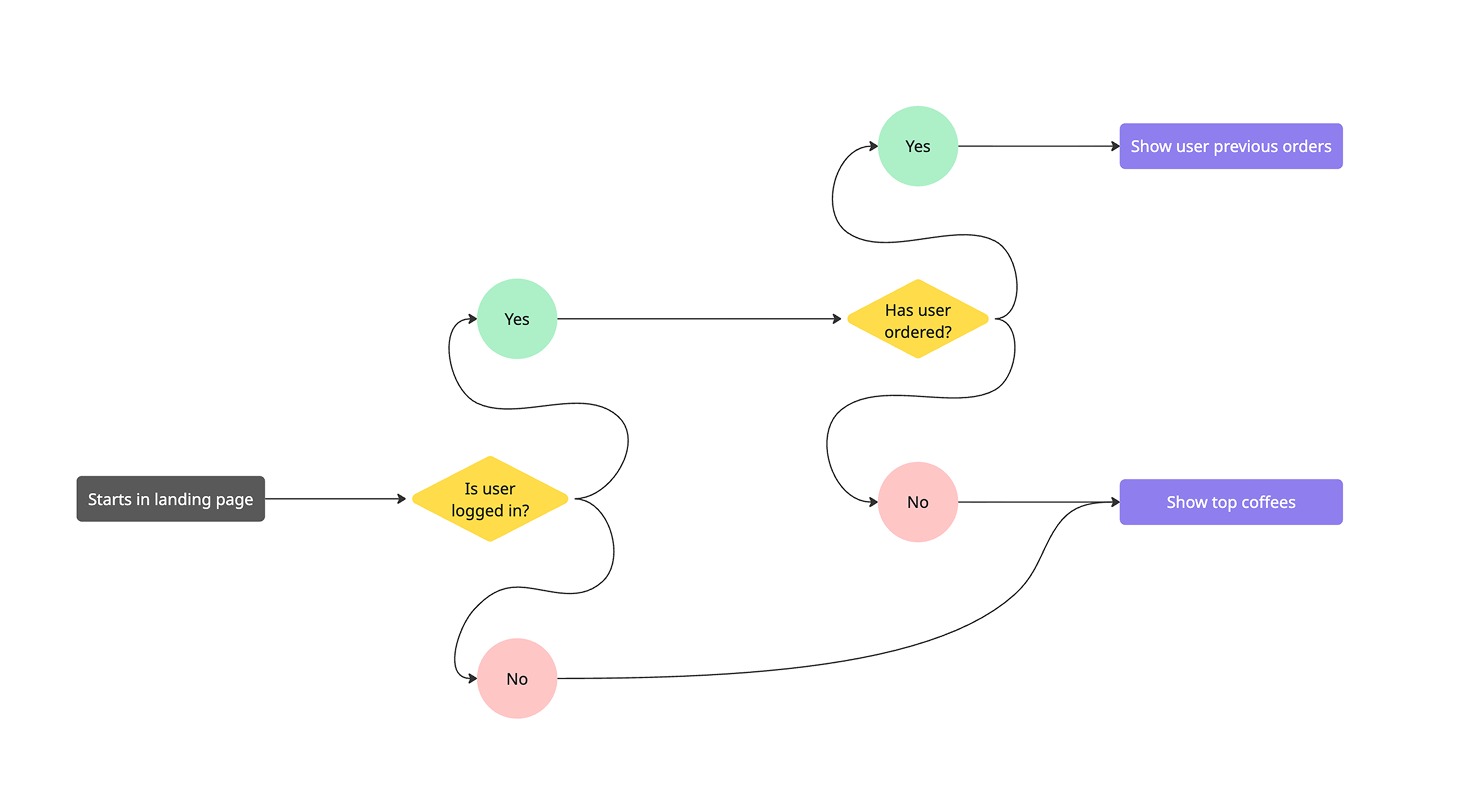
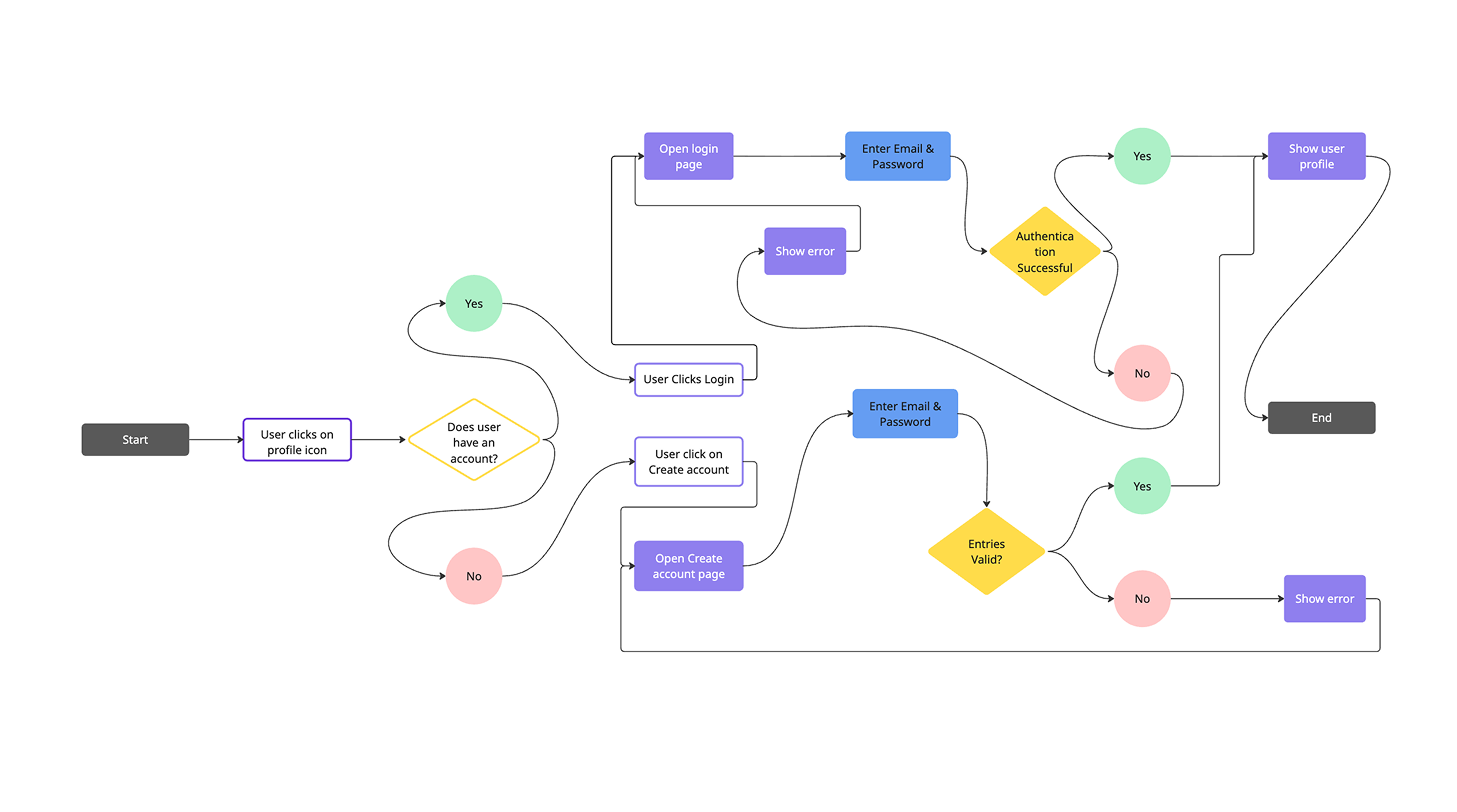
We designed user flows to define the core paths users take to complete an order efficiently. The flows focus on reducing unnecessary steps, clarifying decision points, and supporting quick reordering during peak hours while maintaining clear and realistic product logic.
Documenting flows separately helped maintain clarity while ensuring realistic product logic aligned with both user needs and business goals.
Wireframes
We created low-fidelity wireframes to explore layout, hierarchy, and interaction patterns before visual design. This phase allowed for rapid iteration and early validation of the ordering flow, helping identify improvements before moving into high-fidelity UI.
Insights from wireframes informed improvements in navigation, checkout clarity, and pickup confirmation prior to high-fidelity UI design.
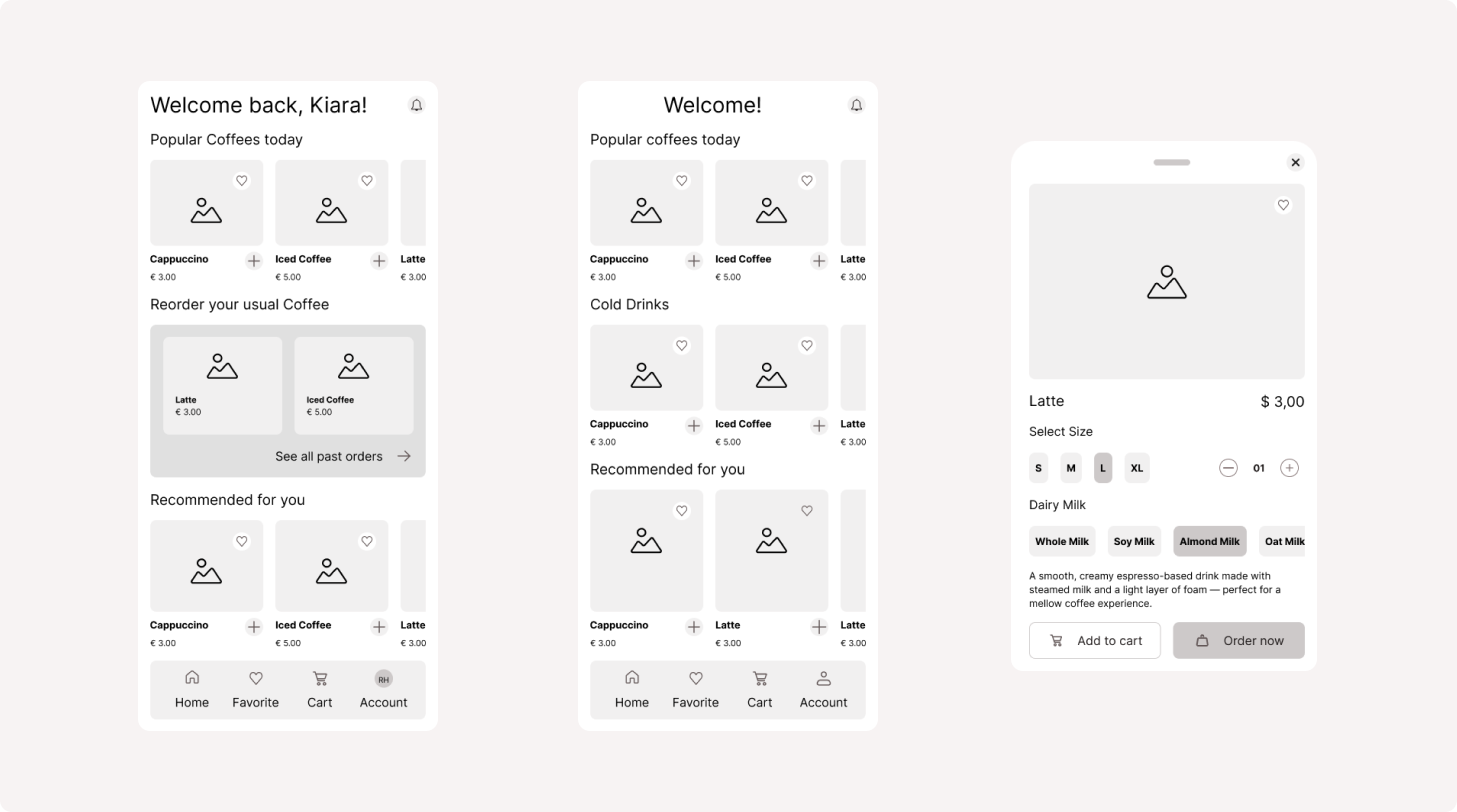
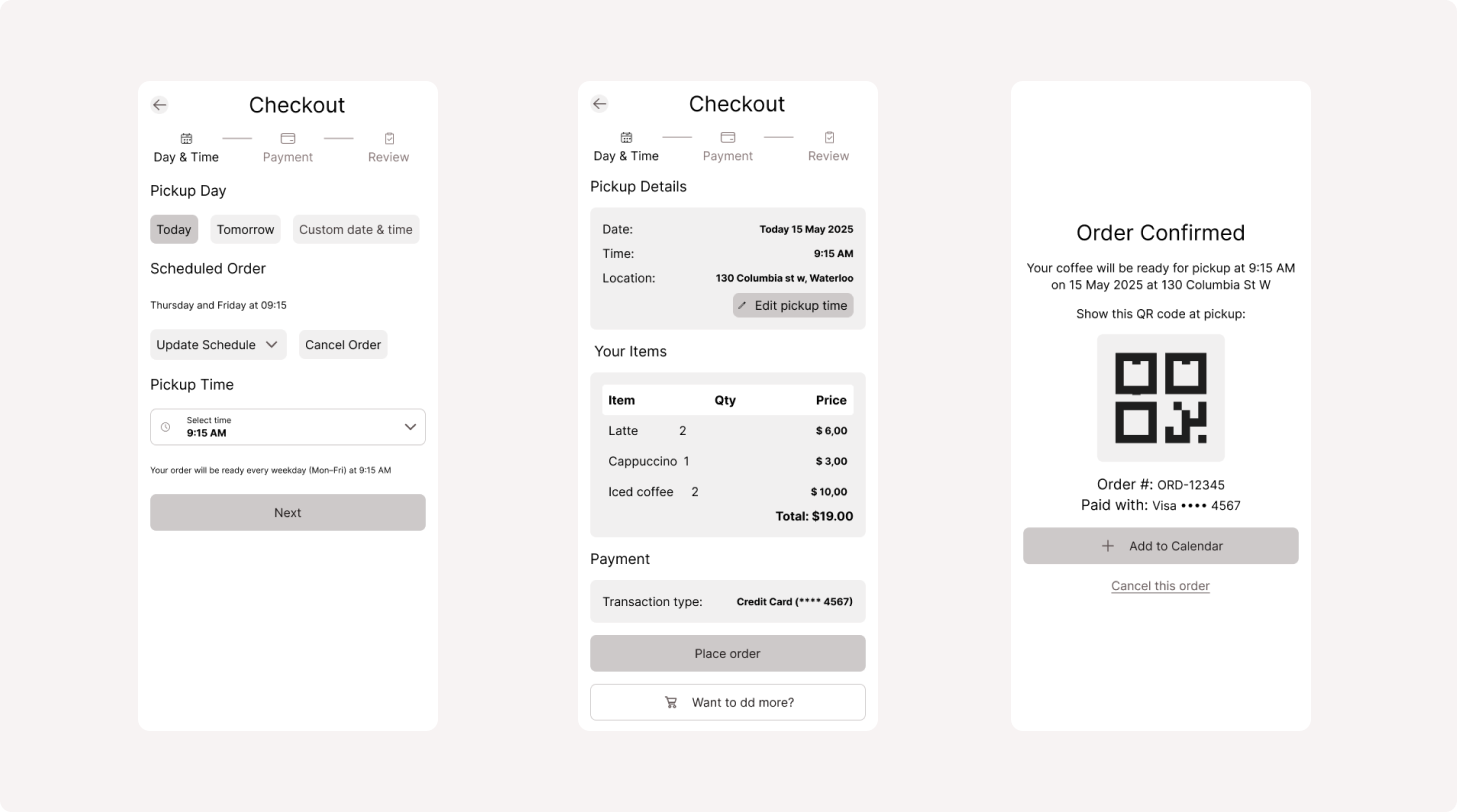
Key Wireframe Decisions
-
Starting an order from the home screen
-
Adding items without unnecessary navigation
-
Clear review and confirmation steps
UI Design
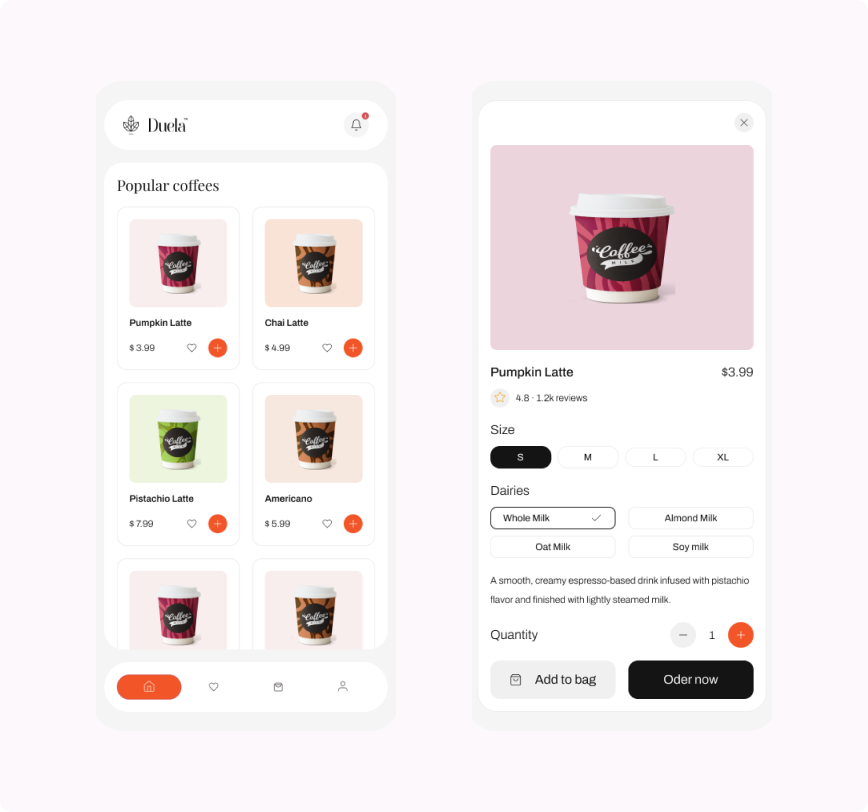
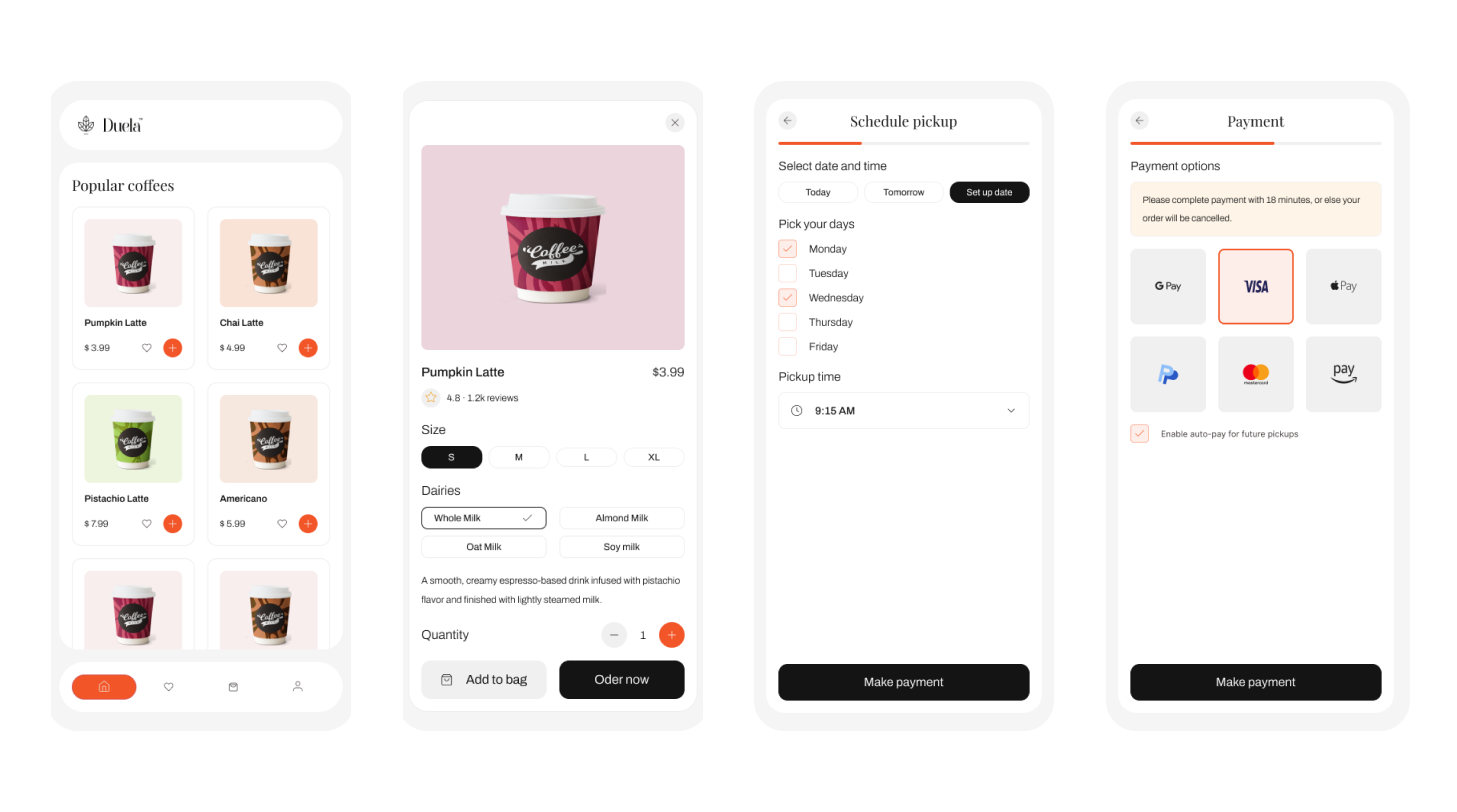
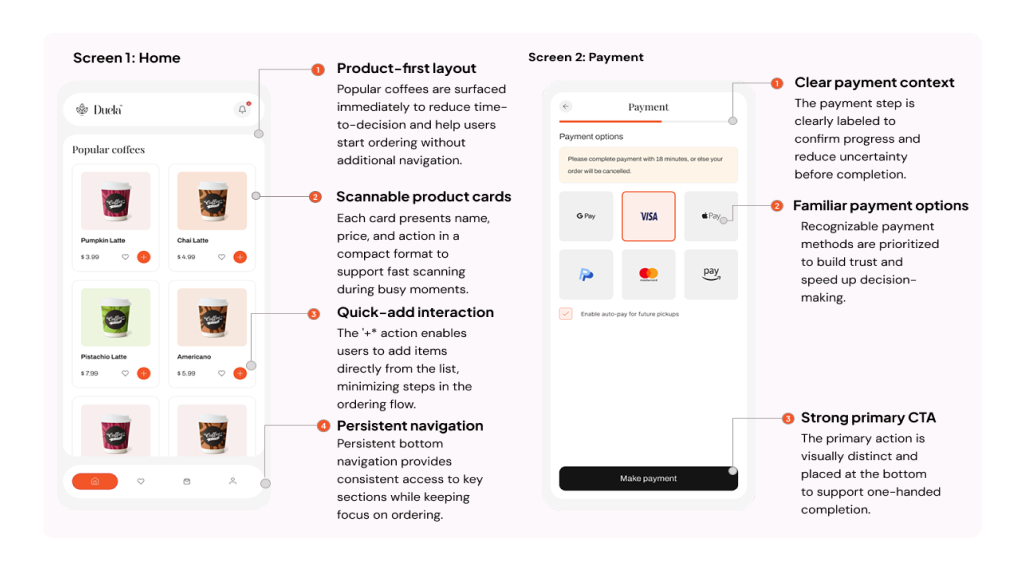
Final UI screens were annotated to highlight key design decisions related to hierarchy, interaction priorities, and usability. These annotations communicate the reasoning behind the design and demonstrate how user needs were translated into clear, efficient interfaces.
Prototype
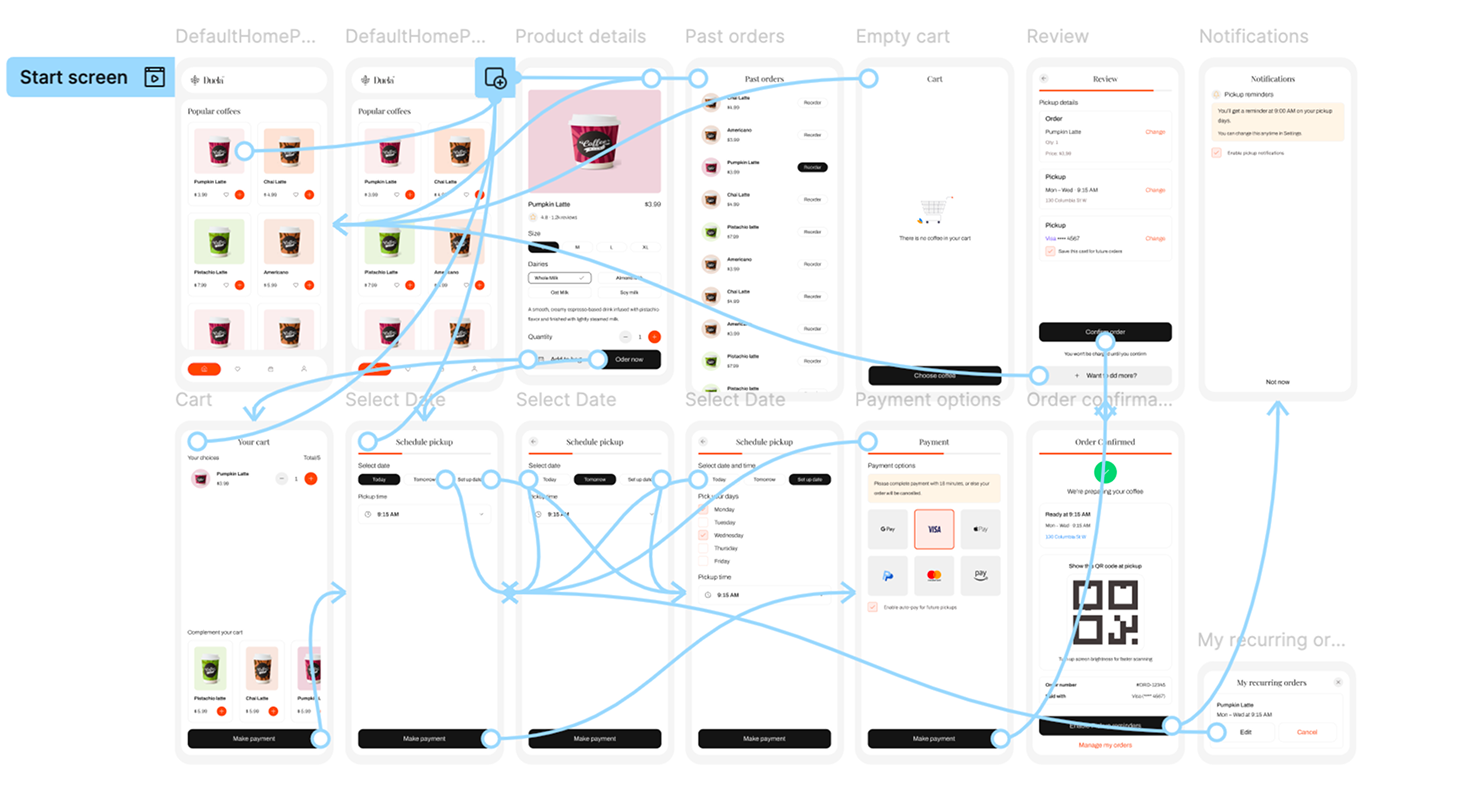
An interactive prototype illustrating the core ordering flow, from browsing to payment completion. It demonstrates how users move through the experience efficiently with clear interactions and minimal friction.
Home → Add Item → Review → Payment → Confirmation
Usability Testing & Iteration
We conducted usability testing to evaluate clarity, flow, and confidence during ordering. Feedback helped identify small points of friction, which informed refinements to navigation, messaging, and action placement.
Conclusion
This case study demonstrates how designing for habitual behavior can reduce friction in high-frequency, time-sensitive experiences. Rather than optimizing for discovery or feature depth, the solution prioritizes speed, predictability, and user confidence during peak moments.
Research insights and journey mapping revealed that uncertainty around pickup readiness caused more stress than ordering itself. This insight directly informed key UX decisions such as fast reordering, recurring pickups, and simplified checkout flows.
The final design shows how aligning product logic with real user routines can transform a daily task into a seamless, low-effort experience, while maintaining clarity and trust throughout the flow.
Key Design Principles
Based on research and competitive analysis, the following design principles guided the Duela experience:
-
Speed over feature depth: Prioritize fast ordering over extensive customization.
-
Predictability builds trust: Clearly communicate pickup timing and order status.
-
Reduce cognitive load: Limit choices and surface only what’s essential at each step.
These principles helped ensure design decisions remained focused on user needs during peak usage moments.